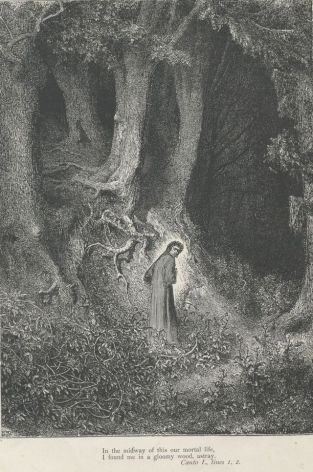
 As a rule I don’t like suffering to no purpose. Suffering should be creative, should give birth to something good and lovely (Achebe 1966).
This paper attempts to trace the processes undertaken in the passage from death, to deathscapes, to grief, and sonic representations of sorrow creating the soundscapes of mourning, and the work left to the bereaved mourner to keep the grieving in motion, to resolve pain and utilise song and lament to pass through melancholia. Ethnographic descriptions are required to solve problems of the silent, the voiceless, the unspeakable, the pre-linguistic, and the indescribable. (Hirschauer 2006: 413) This enquiry was undertaken as a comparative cross-ethnographic analysis focusing on ritual mourning contexts and laments and the process between sorrow and the sonic embodiment of sentiment. The various materials invoked by death affect multi sensory capacities. The acoustic signifiers are the most pronounced, and these ‘icons of crying’ (Urban 1988) are crucial to the proper expression of emotion and demonstrate the depth of relationship and value of one’s loss, which impact on the soundscape of the environment (Schafer 1994) to create temporal deathscapes.
The idea of a variety of ‘scapes’ as a means of understanding contemporary social processes was proposed by the anthropologist Arjun Appadurai (1990, 1996). His reference to the interplay of ethnoscapes, technoscapes, financescapes and ideoscapes has since been supplemented by an edited collection on ‘borderscapes’ (Rajaram and Grundy-Warr 2007) and taken up in work on ‘memoryscapes’ (Ballinger 2003). In a similar context of places, spaces, sites, flows, disjunctures and landscapes, Sidaway suggests we think of deathscapes. (Maddrell, Sidaway 2010b: 4) The idea of deathscapes was set out by Kong (1999); I employ the notion of deathscapes described by Maddrell and Sidaway to portray the depth and resonance of loss and sorrow experienced as it meshes with the soundscape and embodied sentiment in which mourners sing in the absence of the love-object, to immerse themselves in ritual lament, to make public the private, interior grief, to bond mourners, sooth ruptures in the social liminality, and to begin the work of mourning. I am adapting the broad heading of deathscapes to invoke both the places associated with death and for the dead, and how these are imbued with meanings and associations. Not only are those places often emotionally fraught, they are frequently the subjects of social contest and power; whilst sometimes being deeply personal, they can also often be places where the personal and public intersect (Maddrell, Sidaway 2010b: 4). This sequential linking events and actions provide the means of communication with the lost one, the validation of one’s grief and depth of love for the deceased, and, most importantly, the procession of sorrow through sonic sentiment enabling the mourner to pass through melancholy, without being stranded in the static state melancholia, alone and absent.
Death and deathscapes evoke soundscapes, and these acoustic domains would prove a useful site for analysis on an interior state that is animated by grief and given public symbolism in the context of ritual mourning performance and funerary weeping. Mourning, viewed through song as a processual sonic representation of loss, and melancholy as a static state of grief, provides tracing opportunities for processes of sentiment and sorrow. The lift-up-over sounding of overlapping laments intersect soundscape and deathscape, art-representation and death-absence, and provides a place to retreat to, to undertake the work of mourning.
DISYNCHRONICITY AND DISCOURSE
Since the public and the private self, and even the vision of what the self could or should be, are products of social interaction, the structure of every aspect of the self will reflect in various ways the processes of that interaction. Thus music, which is a product of the processes which constitute the realization of the self, will reflect all aspects of the self. (Blacking, 1995a [1969]: 33).
Lutz and White refer to situated emotional expression as “languages of the self” which generate or actively reproduce specific social structures and ideational configurations (Appadurai 1985; Bailey 1983). However, we cannot understand music as merely a system of signs that are give meaning in social contexts or simply as a language of emotions (Blacking 1973). Grieving is a core response to loss through death across cultures (Rosaldo 1989). Both Danforth and Rosaldo use the anthropology of death to enter into the self-reflexivity debate and ground the latter on a universalist anthropology of the emotions. (Seremetakis 1991: 13) Danforth (1982) anticipated Rosaldo’s objections to particularistic treatments of the mourning process. He is concerned with the “core of a universal cultural code” which exceeds particularity and provides the epistemological foundations of the anthropology of death. Encountering the relentless cycle of losses which time’s passage brings confronts one with the existential problem of how to be in a present that holds no promise of a redeeming future (Gould 2010: 284). For Danforth the experience of death occurs in a state of sociocultural liminality in which affected individuals become momentarily detached from collective structures. Aries (1981) analyzes the institution of death in terms of the opposition of structure to event. Death rituals prove resistant to events taking place in other parts of the social order. The belief systems and performances organized around death are nonsynchronous with other cultural codes and values. Thus, for Danforth, “the death of the cultural other can be a privileged moment of cross-cultural connection through which superficial cultural divisions are overcome” (Seremetakis 1984).
Contrasting settings are formed around weeping as a response to loss, provoked by situations of profound anguish. These include funerary mourning and other occasions of abandonment and fear. Feld’s informant Buck confirmed that the sound of funerary weeping was similar to that of weeping in response to song (Feld 1982: 94). Songs and dances provide a context for journeying between life and death as ‘song images deal with the travel of the deceased’s soul and enable ideas of life after death to be passed on’ (Morphy 1994: 15), allowing mourners to express their grief. This expression of grief is the externalisation of sorrow by sonic means; the loss of a love object motivates a mourner to antiphonic response to absence. The monologue with the dead can occur either by itself and as overture to moiroloi (lament), in simultaneity with the mourning discourse, or in its aftermath (Seremetakis 1991: 112). Communal participation in the emotional aftermath of loss, anger, suffering and loneliness is central to the creation of meaning in a cultural system in which everyone must remake physical and emotional continuities with those still living despite personal loss (Magowan 2007: 187). Art has an affinity with loss. You can only really make art out of dead things. In the philosophy of language put forward by Hegel, amongst others, we encounter the intimate bond between representation and absence. This ‘linguistic turn’, as it is termed, describes how the word displaces the thing (Gould 2010: 286). Mastery over reality, both technical and social, grows side by side with the knowledge of how to use words…The right word for an action, for a trick of trade, for an ability, acquires meaning in the measure in which the individual becomes capable to carry out this action. The belief that to know the name of a thing is to get a hold on it is thus empirically true. (Malinowski 1965: 223)
The model of disynchronicity described by Seremetakis (1991) does not remove death rites from processes of social transformation. Rather, it permits one to treat death rites as an arena of social contestation, a space where heterogeneous and antagonistic cultural codes and social interests meet and tangle. On the one hand, these expressive codes reference items and events to a lived world of actual people, places, actions, and behaviours. At the same time they reference the same items and events to abstract qualities and values, elaborately described by the Kaluli notion of a hega or ‘underneath’ (Feld 1982: 222). These events, lament rituals with performative contexts of funerary weeping, intersect the private and public, along with the interior and exterior of actors, in processual motion removed from formal context. The polyphony of the ritual does have limits that indicate a hierarchy in the order of discourse that must emerge in order to generate the formal antiphonic relation. Two dynamics are considered transgressive of the order of discourse and the ritual: (1) the disruption of polyphony by monophony, and (2) the disruption of the integrity of antiphonic reciprocity through the competitive overlapping of mourning performances. (Seremetakis 1991: 112) This key image of “lift-up-over-sounding” clarifies how the soundscape evokes insides ‘sa’, underneaths ‘hegc’, and reflections ‘mama’. These notions involve perceptions, changes of focus and frame, motions of interpretive access to meanings packed into layers of sensation as they continually “lift-up-over” one another (Feld 1982: 266). In Flynn and Laderman’s words: the dead can be imagined also as memories, spirits, or deities, and the physical or spiritual locations where they reside are essential to the vitality of the symbolism, when conflict arises and the meaning and handling of the dead are disputed by interested parties, the battle for control can lead to important changes in both identity and the distribution of power (1994: 51). Finally, this model of disynchronicity contains the imperative to analyze death rituals as integrities with their own temporal rhythms, transformations, and levels of engagement with and disengagement from the social order (Seremetakis 1991: 15).
In the public act of singing there is an immediate distancing between the self and the inner emotive world with the knowledge that one is being heard and listened to, at the same time that the performative enunciation of grief is seen to determine the lamenter’s depth of feeling (Magowan 2007: 102). Weeping and song, in strong contrast to heated argument or arm-twisting rhetoric; do not involve creating tensions and meanings simply by clashing different domains of the literal. Rather, they create that momentary social and personal “inside” sensation in which the weeper or singer can be seen, heard, or felt to be a bird (Feld 1982:222). In Emotion and Meaning in Music, Meyer states that ‘a competent listener perceives and responds to music with his or her total being and through such empathetic identification, music is quite literally felt’ (Meyer 1973: 242). This embodiment of grief signals not only the deconstruction of identity but also the reconstruction of a different mechanism of reality, one evoked to sustain presence in a deathscape marred by absence. Furthermore, these experiences of death, dying and mourning are mediated through the intersections of the body, culture, society and state, and often make a deep impression on sense of self, private and public identity, as well as sense of place in the built and natural environment (Maddrell, Sidaway 2010b: 2).
MUSIC [AND METAPHOR/MOURNING]
What about death? As with art, there is something wide-ranging here, with the one notion pulling together multiple phenomena. (Belshaw 2009: 25)
Sorrow is most thoroughly embodied in sound forms as aesthetically coded sentiment. Weeping, poetics, and song are not associated with occasions of anger and tension; these sentiments are expressed through other vocal and instrumental sound patterns. (Feld 1982: 223) As Katz (1999: 179 emphasis in original) notes, crying must be seen as ‘a panoply of distinctive, aesthetically guided ways of mobilizing the expressive body’. A combination of expressive and textural forms means that sounds mingle with sentiments. In this framework, the lament performance, given the scope of its affective dynamics, cannot be treated only as an individuated psychological or literary artifact. The construction of self and sentiment in the lament performance is an ongoing social process. (Seremetakis 1991: 3) Structurally, the argument is that social sentiment, mediated by birds, is metaphorically expressed in sound. Sonic forms of melody and poetics are given in the expressive modalities of weeping and song as metaphoric means for symbolizing and sharing the sorrows of loss and abandonment. (Feld 1982: 42)
While grief is beyond words, mourning provides the possibility for the restoration of social order, since unrestrained emotion can only be properly contained in song. (Magowan 2007: 102) Containment is demonstrated by calling out personal kin connections in a kind of ‘cry-talk’ (Katz 1999), allowing the silenced to speak again by continuing the potential for communication with their loved one. (Magowan 2007: 86) For the Maniats described by Seremetakis (1991), moiroloi (lament) connotes “crying one’s fate”. These lament rituals are observed in a particular secular, cultural context, considered distinct from the official church liturgy, they are viewed as local and particular to the discourse of women.
Weeping and song do not constitute arguments about the way society or persons should be, but they do present a multiplicity of structures that draw upon culturally ideal and normative scenarios as well as upon their ruptures. Death then, ‘may be considered at one level as essentially marked by its non-narratability, by its rupture with language’ (Das 1990: 346). The acoustic power of the lament, like its language, faces opposite directions: towards the dead and towards the living. (Seremetakis 1991: 119) Like a loss of breath, this rupture of context leaves mourners mute. The procession of non-language acoustic signifiers such as crying or sobbing move through the ruptures to rearrange discourse in sorrow and sentiment. The acoustic signification in the lament can be presented as a single, tripartite structure: sob/discourse/sob. The movement from the non-linguistic (sob) to linguistic media is antiphonic. (Seremetakis 1991: 116) Such that as death can be seen as a final passage of life through culturally constructed ritual context, the expressions of interiority and suffering seem to signify emotions unspoken due to the non-narratability of sorrow, and the crying, screaming, and wailing of mourners.
Musical knowledge ‘passes directly from practice to practice without moving through discourse and consciousness’ (Bourdieu 1990: 74). Music can then be viewed as ‘an arrangement of tones in an irreversible temporal flow’ which can be meaningful as tones can ‘spark recollections, anticipation, conscious ideas and visions linking the composer, the performer and the listener’ (Schutz 1962: 162), thereby drawing in all mourners to share the grief and pain in a ritual context suffused with crying songs.
Crying-songs interweave cascading melodies of mourning – like waterfalls, each stream flows on top of the last, creating a polyphonic veil of sound as women use the same melody, polyphonically echoing one another. This intertextuality interpenetrates self and other, subject and object bringing each into the realm of the other and providing a collective basis for performing and listening. (Magowan 2007: 86) Acoustics are always embodied, spatialised and interconnected and sounds identify place experiences through their height, depth, resonance and directionality (Feld 1996: 98). The mourning ritual is embedded in polyphonic media: poetry, acoustic effects, techniques of the body, vocal music, and the arrangement of physical artifacts as material narratives. (Seremetakis 1991: 3) These overlapping antiphonic responses to the loss of the mourner embody sorrow for the mourner, and grief over the loss of the deceased or love-object. Death gouges a rupture in reality for communities, ripping collectives apart. The overlapping and cascading melodies of mourning described by Katz, Magowan, Feld and Seremetakis present an antiphonic reciprocity between women in the mourning ritual that entails the intensive interpenetration of collective and individual poetic creation to circumvent social ruptures stabbed to the heart of mourners. Seremetakis observes the interaction of public and personal in the acoustics of Inner Mani, the duality of the acoustics of the inside and the acoustics of the outside show that the acoustics of the inside gather language, sound, and meaning into closed circles of speaking subjects. The acoustics of the outside eject sound and meaning from bounded social situations outward. It is a collectivizing discourse that has an impact on all members of society, although the authors are almost exclusively women. When the boundary between life and death is crossed, women initially disseminate the signs of transgression through screaming. (Seremetakis 1991: 72) The rupture is always signified by women, sound and sentiment is expelled through crying, weeping, and screaming before the inclusion of narrative text surfaces and the transformation to song begins, moving men to tears and drawing the collective into the personal for redemption for the mourners and the lost ones.
Modern historical self-consciousness can avoid falling back into myths of transcendence only by acknowledging that the past, while dead, is not gone, and that we coexist with it not as its afterlife but as its survivor (Horowitz 2001: 22) But, ultimately, there is not absolute resolution to grief and loss for singers and listeners, only and accumulation of patterns of grieving which may be stylised in songs and expressed at appropriate moments in ritual. Thus, a ritual continuum of death and dying orients life and living shaping a progression of emotions from sorrow to comfort (Magowan 2007: 187). Freud’s essay Mourning and Melancholia provides a useful distinction between these reactions to loss. Freud writes that mourning and melancholy are comparable because of their shared similarities. Mourning is a reaction to loss of a love object. Sometimes the object hasn’t actually died but has been lost as an object of love. Mourning is time-limited and is in response to some external loss that is commonly recognised as reason enough for the grieving person’s behaviour. Melancholia and mourning display similar symptoms; a loss of vitality and interest in the world, a sense of hopelessness. Melancholia might be better described as an ongoing state of mourning that might otherwise be known as depression and which does not work itself through. This is usually because the basis of the melancholia remains in some ways unknown to the sufferer. As Freud puts it: He knows whom he has lost but not what he has lost (Freud 1917: 254).
PROCESS AND PERFORMANCE
Art is man’s constant effort to create for himself a different order of reality from that which is given to him (Achebe 1990).
These differences between weeping and song as expressive sound forms communicating Kaluli sentiments are resolved by their mutual aesthetic trope. What appears in myth as the scenario of mediation, “becoming a bird”, reappears in expression as a pervasive metaphor for form and performance. Mediation additionally is linked to an intimate symbolic dualism. Birds, particularly fruitdoves, embody death and the sonic reflection of ane mama, as well as melodies and timbres associated with sadness. Fruitdove calls, then, mediate sentiments of sorrow, loss, and isolation in sounds of weeping, poetics, and song. (Feld 1982: 220) This symbolic dualism is a fruitful site of contestation; the interplay between interior and exterior, public and personal, melancholy and melancholia are mediated by process and practice in the ritual context. This dualism can be metaphorically portrayed in sonic narrative as a surfacing of the bodily interior, viewed through the opposition of cultural constructivism in lament rituals and the rupture of the social by death and its subsequent healing through processes evoked sonically in tracing the passage of transitional mourning from melancholy to melancholia witnessed by various scholars as being ultimately unbound from cultural context, as universally particular representations of encompassing sorrow that require, but do not connote, cultural recognition of the deceased and his aims.
As each relative becomes immortalised in particular patterns of song, so singers and listeners acquire a depth of emotional sedimentation relating to their memories of the deceased. They accomplish this process in different ways while inner emotions of the listener feed back upon the self, performative emotions of the singer require people temporarily to transcend personal experiences for others. (Magowan 2007: 187) Just as the sense of sacred has become less confined, more fluid, in contemporary society, so too have forms of memorial, remembrance practices, and their location. Thus, in addition to the act of dying and bodily disposal, it is this creation of performative as well as inscribed space/place of remembrance which transforms everyday landscape into deathscape. (Maddrell, Sidaway 2010b: 4) Rugg describes the transformation of death space as one that is constantly in motion, such as the grieving processes from melancholy to melancholia observed by Freud, and as culturally constructed. Burial space is essentially mutable: its meaning does not remain static over time; and its significance is not uniform over all cultures. Even at a basic level, the significance of such space alters as time accrues between the living and the dead (2000: 259). Ultimately it is found in each individual’s evolving relation to the absence – presence of the deceased and the places associated with them. (Maddrell, Sidaway 2010b: 3) Others, such as Gould (2010) see it as a process more akin to recuperation. From this perspective, absence and loss are inextricably bound up in the very possibility of conceptual thought. They are the preconditions for language and representation. In an apparent paradox, absence is the ground for thought (Gould 2010: 286).
Although performance externalises emotion, it should be noted that in both dancing and singing a discrepancy exists between the performance of resolution and the feeling-state of resolution. In the latter case, resolution is often only a temporary experience never finite since ‘suffering is only rarely…radically “transformed” or “resolved”; rather, it ebbs and flows’ (Hollan 1994). Cosmology and fate enter the social domain as fragments, in improvised mourning songs, such as Feld’s description of elaboration and improvisation of text by women in weeping song transformation. These divinatory practices are self-reflexive metacommentaries on social and cosmological order. Deployed by women both inside and outside mourning rituals, they can shatter normative surfaces of everyday life. The women’s divinatory practices are instruments of cultural power. Their mourning ceremonies are transformative and not merely expressive performances (Seremetakis 1991: 2) In song, text and melodies are composed simultaneously and consciously by the composer. Magowan states that storytelling and singing are always process rather than product, action rather than act as they materialise in the sense of telling and performing (2007: 105). The uniqueness of weeping for women is that it gives way to another type of song – one sung while weeping, where the melodic contour is fixed by the three or four notes of the muni call symbol, and where the text is spontaneously improvised by the weeping singer as a personal recollection of shared experiences with the deceased or departed. (Feld 1982: 34)
These cross-cultural contexts of performance open new moral spaces in the deathscape and soundscape to which participants bring their own processes, thoughts and actions through alternative systems of knowledge and experience, ruptured from the normative contexts of social reality. In these common spaces of performance, there is an opportunity to explore differing sociocultural realities (Schutz 1976) by recognising the heterogeneity of multiple forms of knowledge. There is a correlation between the passage into cathartic emotions, the passage from life to death, and loss of breath. The loss of breath is the movement of the self from the inside to the outside. This passage signifies the disorderly exposure of interiority (Seremetakis 1991: 117). In this movement from nonlanguage to language to nonlanguage, the sob occupies a pivotal position; it functions as a hinge in the soloist’s improvisation. This function can be easily overlooked if one is to treat moiroloi (lament) only in musical terms. (Seremetakis 1991: 117) The interplay of text and emotion connects the sounds of song with their emotional significance, entailing all mourners in the process of death and grieving. (Magowan 2007: 86) Lengthy text will be spontaneously improvised with the cried melody, sticking very closely to the same contour. In many instances, particularly at funerals, these forms of women’s weeping are found together. First the fast emotional crying, then a settling down to crying with what the muni call melody, then the addition of slight textual insertions, then full-blown improvised cried song: weeping…sung weeping…wept song. Although both men and women use the same melodic cry in the contexts of response to song, response to sorrow over loss and abandonment and death, it is generally women who add text and only women who turn the sung weeping into wept song. In effect, while sadness moves both men and women to weeping, it is weeping that moves women to song. (Feld 1982: 33)
Sansom has argued that it is possible to delineate ‘primary strings’ of emotion in all the oral and written forms of human encounter, whereby emotions are embedded in and properly expressed in the significance of social action and meaning, such as during Maniat moiroloi (lament), the Kaluli wept song, and Yolngu mourning rituals. ‘Primary strings’ of emotion are ‘linked serially and sequentially both by logic and by socially sanctioned entailment…and joined in a string…they inform one another.’ (Sansom 2002: 159) The sequential links fuse ruptures, mapping the collective path through sonic representation as acoustics augment the deathscape. Magowan shows how clans join together to sing her spirit to its resting place, as Seremetakis explains: Silent death is the bad death. It implies the deceased was alone, without clan, without “numbers”, without appearance (fanerosi), or screaming. The silent death is considered a naked death. Death must always have its accompaniment. (Seremetakis 1991: 76)
CONCLUSION
In melancholia, the grief is directed upon the self: The analogy with mourning led us to conclude that he had suffered a loss in regard to an object; what he tells us points to a loss in regard to his ego (Freud 1917: 256). Song, music, wept art provide the means to transform the state of grievous lament, to an active process, to forge a means of communication with the deceased and to comfort by creating something ‘good and lovely’ as well as a different order of reality to come to terms with loss. Loss is how art, as musical lament, provides the material for affective containment of the emotional ruination that comes from absence. A loss of love becomes a deconstruction of identity; a static state is which one is immobilized by grief. In melancholia, there is ‘confusion between the loss of self and the loss of the other’ (Gould 2010: 289). Nagel insists here on an asymmetry between life and death:
If it is good to be alive, that advantage can be attributed to a person at each point of his life. It is a good of which Bach had more than Schubert, simply because he lived longer. Death, however, is not an evil of which Shakespeare has so far received a larger portion than Proust (1979: 3).
Music provides an alternative life narrative structure within which we can define ourselves in the absence of the other whilst also moving directly with and beyond culture and representation, impacting collective identity through the lament mobilisation of self and sorrow, utilising overlapping polyphonic cry-song with text. The ruptures with language caused by loss, and stagnant melancholia, can be reconstructed by mourners during the grievous lament to the departed. The weeping acoustics of the deathscape mesh and overlap with the soundscape of elaboration on text and discourse, transforming non-language, such as a sob, into weeping, to song, to creation and antiphonic response. The scholar Gould describes the death of her father in ethnographic text, the loss that accrued, and the transformation in her artwork, describing the grieving process as, ‘undertaken in my imagination with regards to looking at artworks and making art, and it also took place in the outside world. It was a journey in search of a place to go to, and imaginary or psychological space to retreat to, in order to undertake the task that death leaves us with; the work of mourning as Freud termed it. Each of us uses whatever is at hand in undertaking this task. (Gould 2010: 283)
In this sense ethnographic texts of lament performance can be seen as academe in motion, crystallising broader issues in anthropology concerned with the effects of postmoderism and reflexivity on the discipline. Ethnographic descriptions are less fixed on the present. They allow for the study of moves in a chain of action while obtaining a long-term perspective, thus noting the connection between individual actions and their context. Shweder goes to far as to say that the credo of modern anthropology tout court – that society and morality derive from the projection of mental representations onto the universe and their imposition as symbolic forms; that socio-cultural reality is not other than the stories told about it, the narratives in which it is represented – derives from Nietzsche (1991: 39).
 SonifiedScapes